Showing posts with label Philosophy. Show all posts

Tuesday, May 14, 2013

Edible Embellishments

It's finals week, and I'm taking a break from microbial genetics to write a post of pretty tasty things. So, without further ado, here are a few of my favorite things:

1. Airbrush
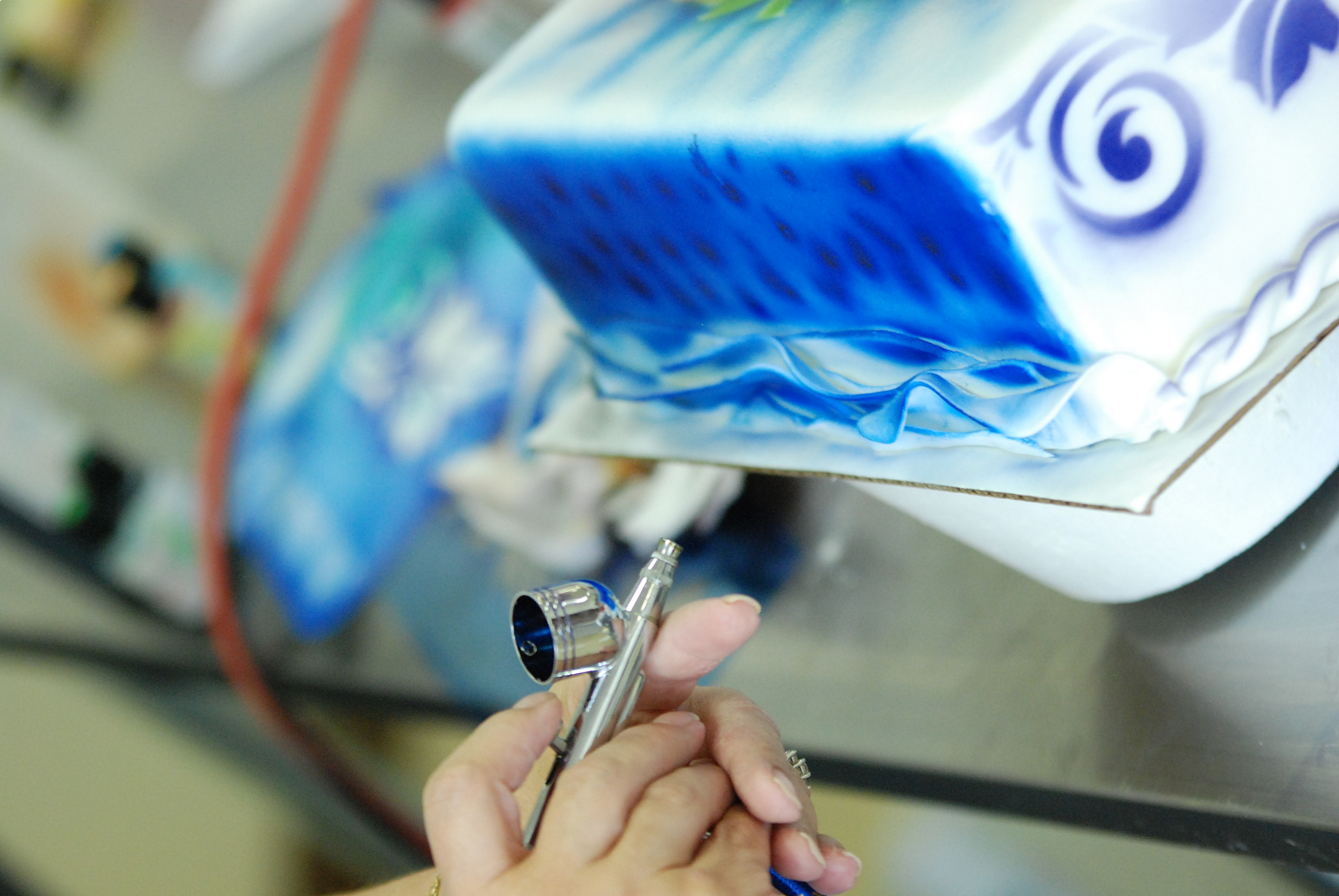
image from here

Same idea as a normal paint airbrush, except this one uses edible paints! Check out these stunningly delicious chocolates from the chocolate shop near my house:


2. Sugar Pearls (a.k.a. Dragees or Fancy Sprinkles)

image from here

Sugar pearls are the cornerstone of daintyness

image from here


3. Gold Leaf

I'm jumping from dainty to down right gaudy. 

image from here

...it can't be good to ingest this much gold... 

image from here


4. Disco Dust

Saved my favorite for last! Disco dust is just edible glitter that looks fabulous on everything!

image from here

Perfect for bedazzling icing...

image from here

...or for making home-made Peeps shimmer! (I seriously need to make myself some Peeps!)


Image and Recipe from Buttercream Blondie


But the best part about Disco Dust is that it doesn't dissolve. Meaning you can use it to add some pizzazz to any beverage!

 image from here

In the end, sparkles and shiny things should probably be consumed in moderation...

image from HERE.


Wednesday, February 8, 2012

A Cast Iron Love Affair...

After destroying a high-end non-stick Scanpan, I started researching the original, indestructible, non-stick pan: cast iron. I started, as I often do, chatting with a salesperson at City Kitchens. He informed me that most, if not all of the modern non-stick surfaces are intended to be used with vegetable fats and repeated use with animal fat can actually degrade the non-stick surface. Considering that I cook daily with bacon grease, modern non-stick surfaces are clearly not for me.

So, cast iron. Something about the Lodge brand pans has never impressed me. They're bulky, pre-seasoned with who-knows-what, and their rough texture just doesn't seems very conducive to optimal non-stick. However Lodge is one of the few (American made) cast iron cookware companies that still exists... so I turned to eBay to find some quality old-fashioned cast iron from the early 1900's.

Griswold and Wagner were two American cast iron producers around the turn of the century. They were eventually bought in the 1950's and now you can apparently still find "Wagner" pans that are now made in China.  Both Wagner and Griswold pans gained a reputation of being high quality pans - they're light weight and forged in a way that maximizes non-stickness. Interestingly, Griswold pans are hot collectors items while Wagner pans go relatively unnoticed in the antique market.  This means it was relatively easy for me to find a prime-condition 10inch Wagner pan for about $30 (Whereas the exact same pan with a "Griswold" stamp might have cost at least $100... economics is silly).

As soon as I got my Wagner pan in the mail, I threw it in the oven to cook off the seasoning so that I could re-season it with bacon grease.  What is brilliant about this is that every morning when I cook bacon, I'm doing something good for my pan - whereas before I was just slowly killing my Scanpan with bacon.  It's funny how much better I feel about life knowing I'm being good to my cast iron pan and in return my cast iron pan is good to me.

The first thing I made was poutine. I fried french fries in my cast iron pan. Then poured off the excess grease, spread the french fries on the bottom of the pan, covered them with gravy and Golden Glen Farms cheese curds and then I put the whole thing in the oven until the cheese melted.


This pan made the best french fries I've ever had.  Needless to say, I'm totally head over heals in love with cast iron.

Tuesday, September 13, 2011

On Food and Culture


I developed a passion for food and cooking at a young age when I realized that food is the center of life.  Food is everything.   Food can induce any emotion, bring people together or divide them apart.  There’s food in your yard, the gas you put in your tank is ancient, geologically fermented food, not to mention we are all participating in one grand food chain that binds us all together under one universal consciousness, or something.  That was my teenage idealism, which I still believe in, but it’s developed with age.   This food passion is what drove me to become a Biology major and I have a sort of constant meditation churning away inside my brain contemplating all things food.  I had an experience earlier this year that shook my beliefs on food and I realized on my bike-ride to work today that I need to address this, so here it is.

I generally pride myself in being simultaneously conscious of the things I eat, while respecting and partaking in the food of others.  “You are what you eat” is a common saying that I take seriously, in two ways. First, the molecules that make up what you consume will be used to create and re-build your own flesh.  Secondly, we all have an emotional relationship with our food and I believe that we all take pride in or at least enjoy food to some extent.  Therefore, what we eat is also an outward expression of who we are and by sharing food, we are sharing ourselves.  This is why I don’t push my own food beliefs on other people.

Whenever I hear someone reject food that is offered to them, I am instinctively offended.  I feel like the person rejecting is somehow culturally disrespecting the person who is offering food, even if that’s not the intension.  I’m generally talking about vegetarians, vegans, raw-foodists, etc. - people who have chosen a diet for reasons other than an allergy or diagnosed medical condition.  However, this raises the question of what is the difference between food and medicine, and then how do we culturally deal with the difference, if there is a difference?  I eat the way that I do because it makes me feel good and healthy.  When I went to visit family earlier this year I spent the week generally eating the way that they eat and I ended up getting incredibly sick.   Asian cultures (Chinese, Indian, Japanese…) tend to blur the lines much more between food and medicine than we do here in the US.  National Geographic recently reported on a new archeological find from some ancient European civilization (Rome?): medicinal pills made out of onions, celery, and other common vegetables that we would probably consider as food and not medicine now.

So how do we develop and share a vibrant culture of food, if everyone has their own individual eating habits?  I think what I’m beginning to realize is that it is about communication.  Communicating with yourself to gain an intimate understanding of your body’s needs so that you can communicate with others to let them know what you do or do not need.  I think the key is going about it respectfully, though, and discussing any foody disagreements with the understanding that everyone’s body chemistry and culture is fairly different, and that’s okay.